Backpacking Siamese Ponds
Fall overnite trip to explore the Siamese Ponds wilderness.
TL;DR: A full-pack walk over Eleventh Mountain and along the Scandaga leads into one of those Adirondack routes that keeps getting better the farther in you go.
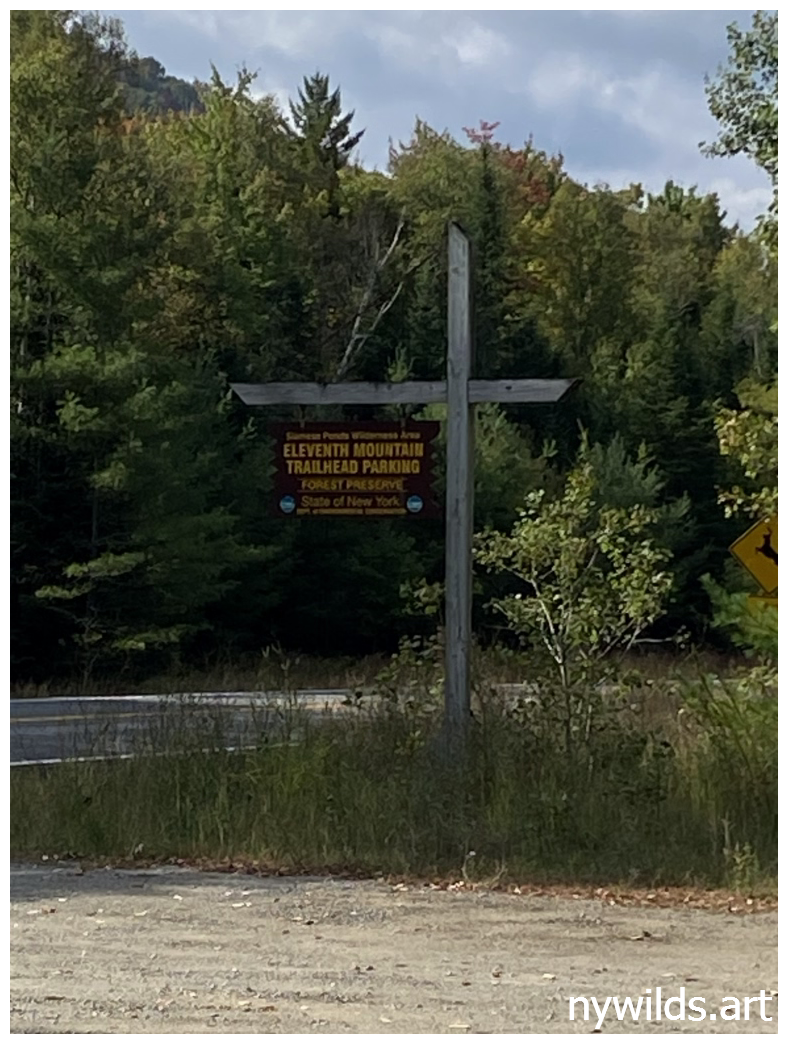
The Siamese Ponds Wilderness has a way of asking for commitment early. There is no soft beginning here, no long warmup to ease you into the woods. The trail rises almost at once, and with a full pack on my back the first climb felt like an honest introduction. My knee had not exactly signed on for hiking yet, and it made that clear right away. Lungs not yet settled, the weight of food, shelter, and water all making themselves known within the first stretch, it was the kind of start that strips a day down to basics. Breathe. Step. Adjust the shoulder straps. Keep moving.
That quick uphill effort over Eleventh Mountain set the tone for the rest of the route. This was not a hike built around a single overlook or a short burst to a summit. It was a longer passage through changing terrain, one that slowly traded elevation for water and then followed the logic of the river deep into the interior. By mid-September, the woods were already beginning to turn. The landscape carried that brief Adirondack moment just before full fall, when green is still present but no longer dominant. Hillsides were brushed with early yellow, a little orange, the first dry leaves underfoot, and a softness in the light that made everything feel transitional.
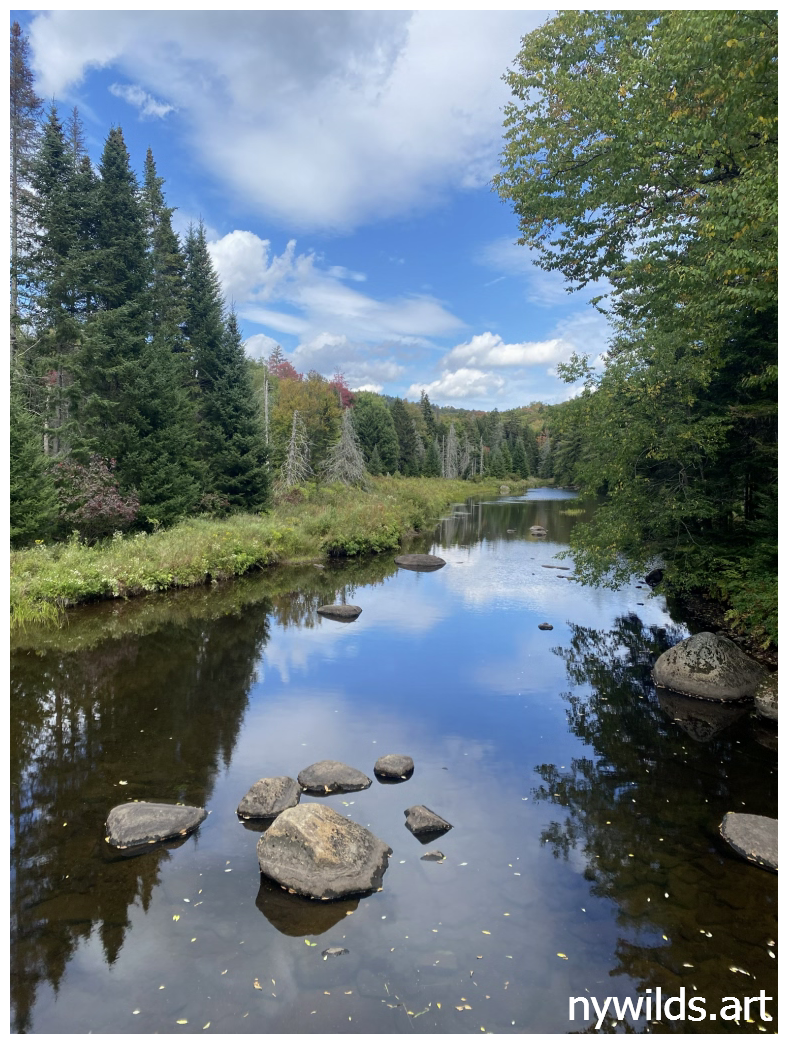
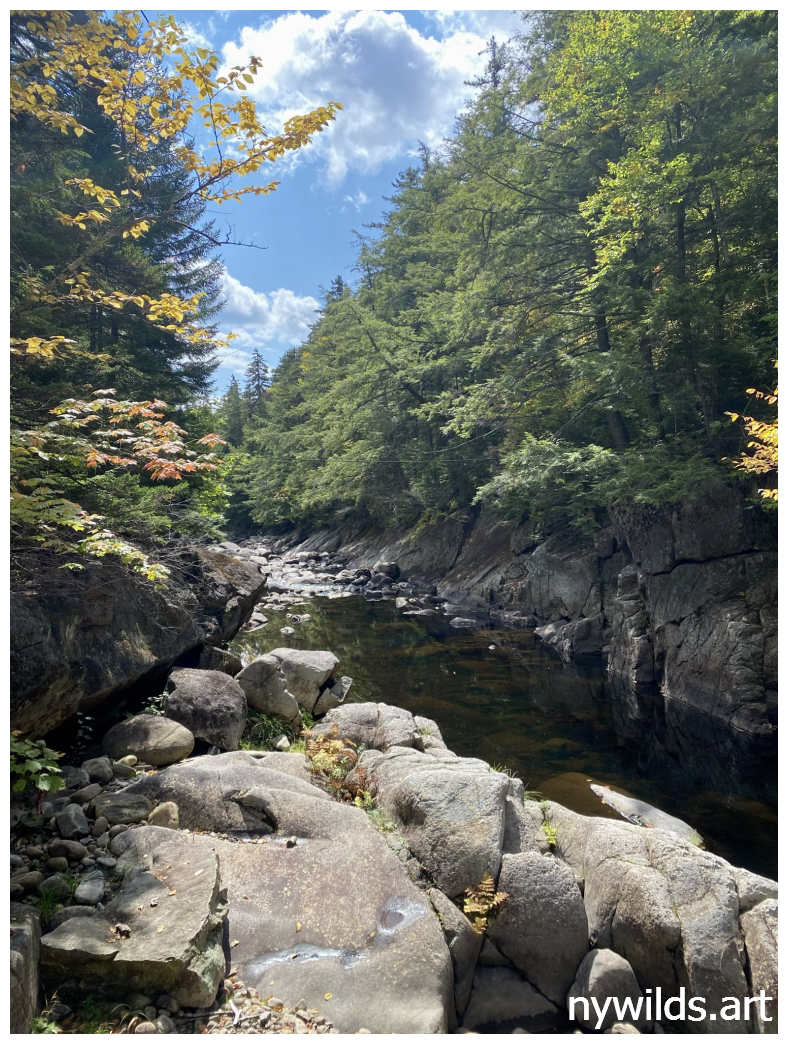
After the ridge, the trail relaxed into a gentler descent toward the Scandaga River. That shift in grade changed the mood of the day. The opening climb had been all effort and adjustment. The river corridor brought rhythm. Once the water came into view, the route began to feel less like a push through terrain and more like a conversation with it. In a season of low water, the river showed more of itself than it does in a fuller year. Stones sat exposed where current usually runs over them. Gravel and sand bars widened. Small channels braided and narrowed. The banks looked open and readable. It gave the river images, and the walk itself, a sense of structure and texture that high water tends to hide.
With the river running low and the corridor opening up in ways the map does not really advertise, the views carried more drama than expected. Those revealed vistas invite the inner artist to wonder what medium could ever hold the moment properly: pastel, acrylic, or maybe watercolor. Each opening along the river raises the same question of how a scene like this can be stamped in time.
That is part of what makes this route memorable. So much of the day is shaped by moving alongside water rather than merely crossing it. The Scandaga is not background on this hike. It becomes company. At times it runs quiet and shallow, spread thin over rock. In other places it gathers itself into darker lines and deeper bends. With low water, every change in depth and current becomes easier to see. The river seemed less like a single body and more like a sequence of small decisions, each one guided by stone, grade, and time.
Continuing upstream, the route gradually narrows the world. The pace slows to the speed of boots and water. The farther you go, the more the trip becomes inward. Solo travel tends to do that anyway, but certain places sharpen it. This was one of them. There are stretches of trail where the mind keeps busy with logistics. Then there are stretches where the land takes over and thought starts to thin out. Following the river toward the suspension bridge, I could feel the day crossing from one category into the other.
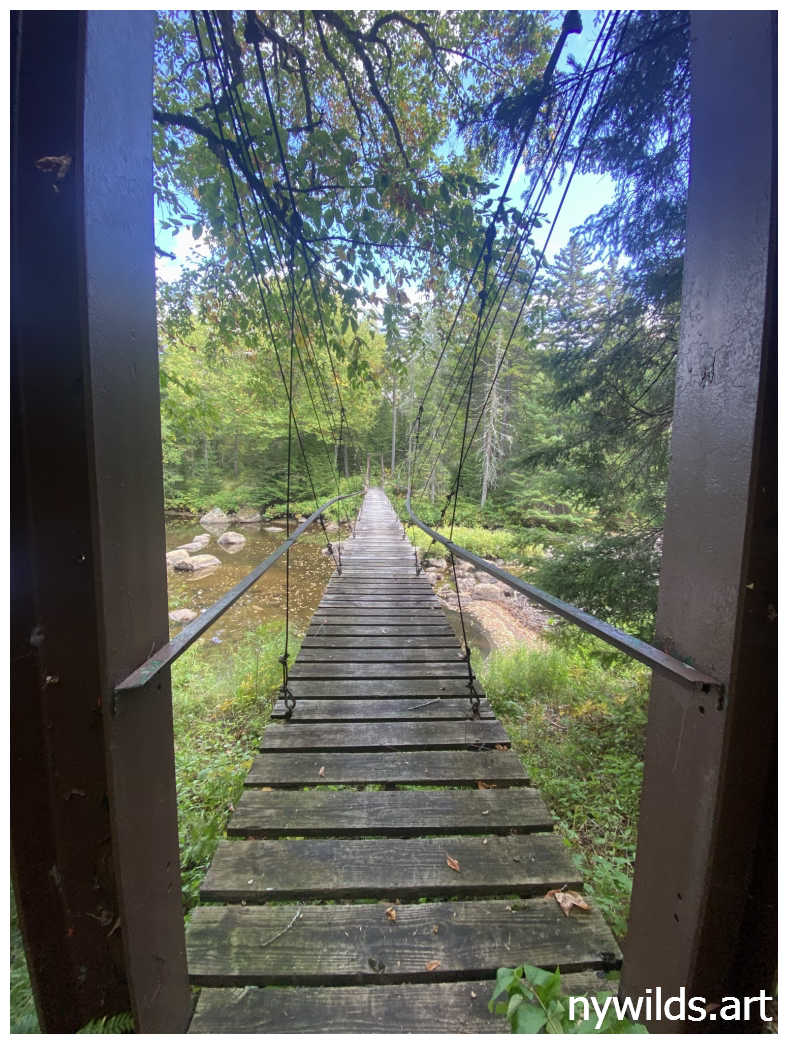
The bridge always stands out in a place like this. It feels almost improbable, a clean human line set in the middle of a wild drainage. In that sense it is a high point even without major elevation. It hints at civilization without breaking the spell of the backcountry. A lean-to nearby, established tent sites, and the bridge itself all suggest that others have passed through and rested here, yet the area still feels deeply wooded and remote. That balance is part of the appeal. The wilderness is real, but so is the old trail culture that has allowed people to move through it with some measure of continuity.
It should be noted that the path along the river carries the feel of an old logging road, perhaps even a former mail route to some logging camp from years gone by. That possibility adds another layer to the walk, a sense that the trail is not only following water, but also the faint remaining logic of work, travel, and backcountry life from another era.
From the bridge, the route changes character once again. The climb along the much smaller Siamese River is mild, but after a long approach it asks for one more measured effort. By then the legs know the day. The pack sits differently. The miles are no longer abstract. Still, there is something motivating about that final uphill stretch because it carries promise. You know the ponds are ahead, hidden just enough to stay mysterious. You know the woods are opening toward still water somewhere beyond the next rise.
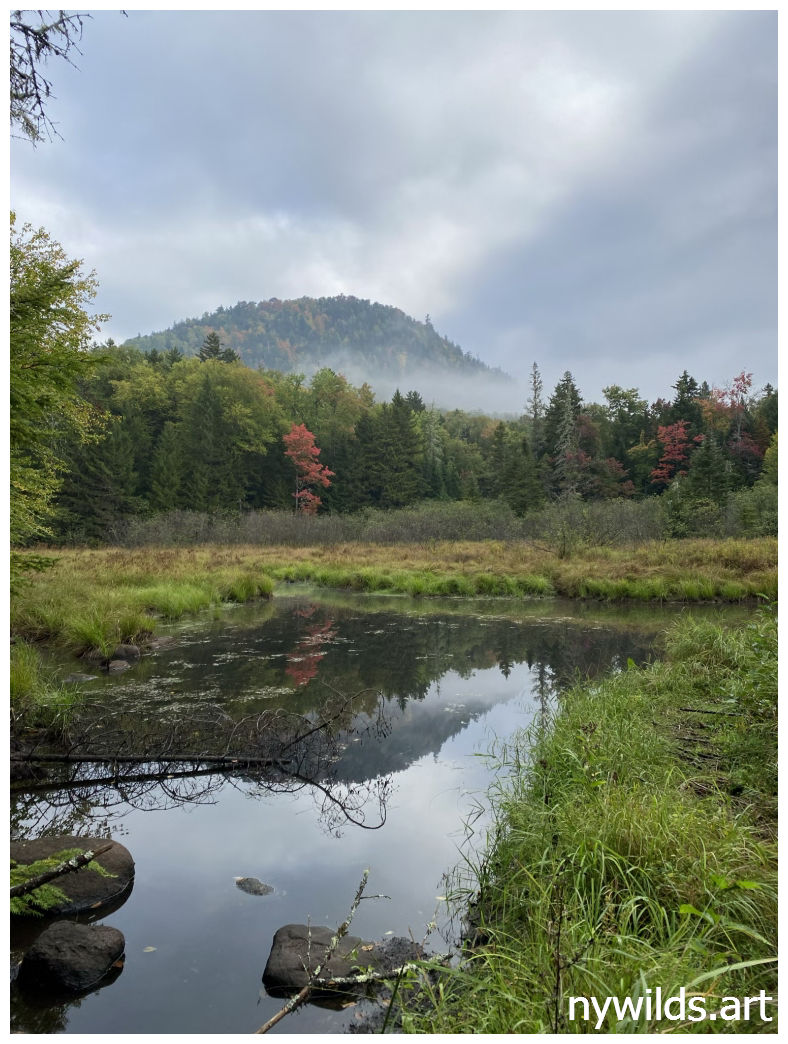
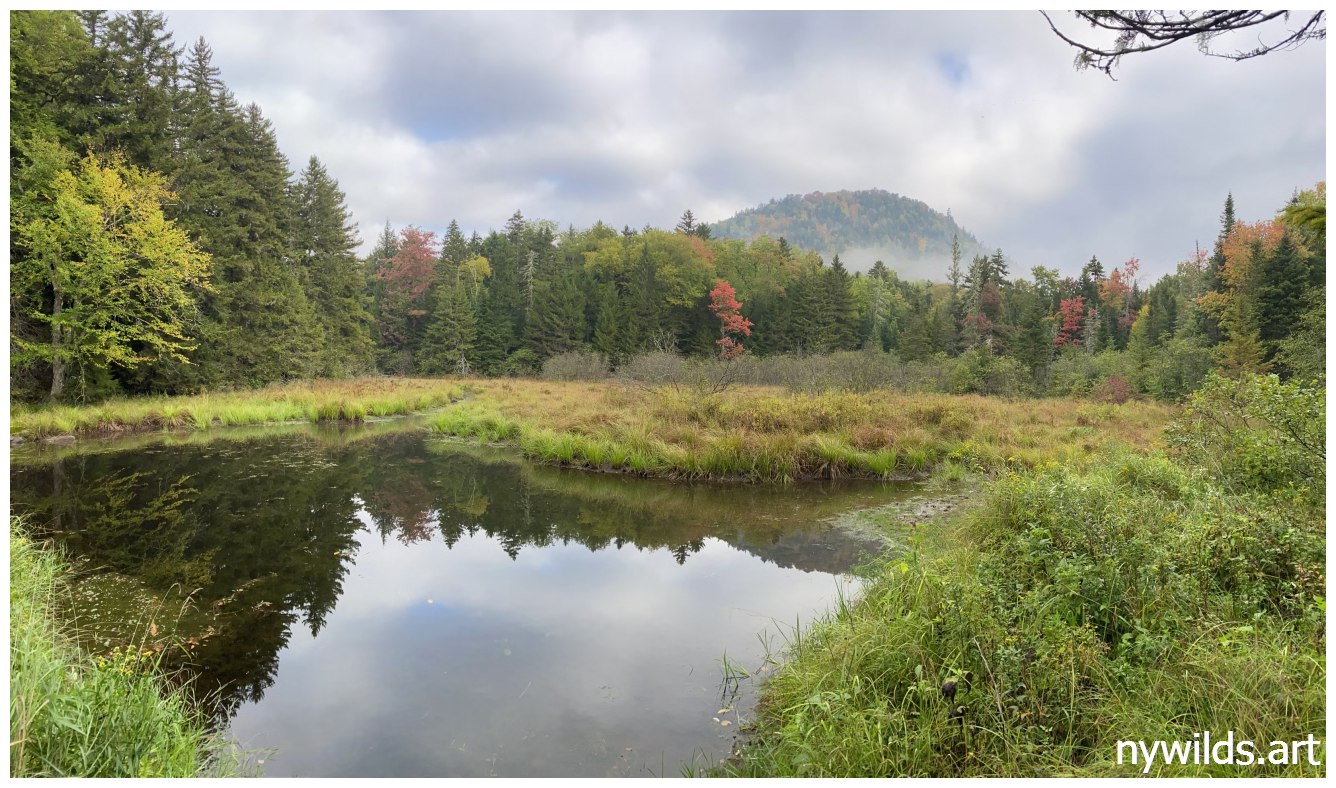
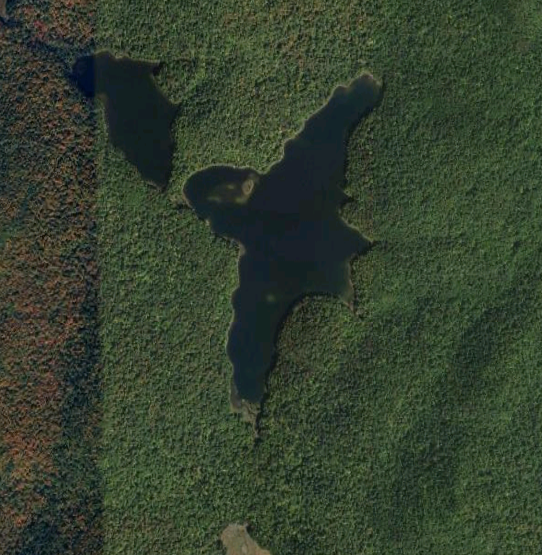
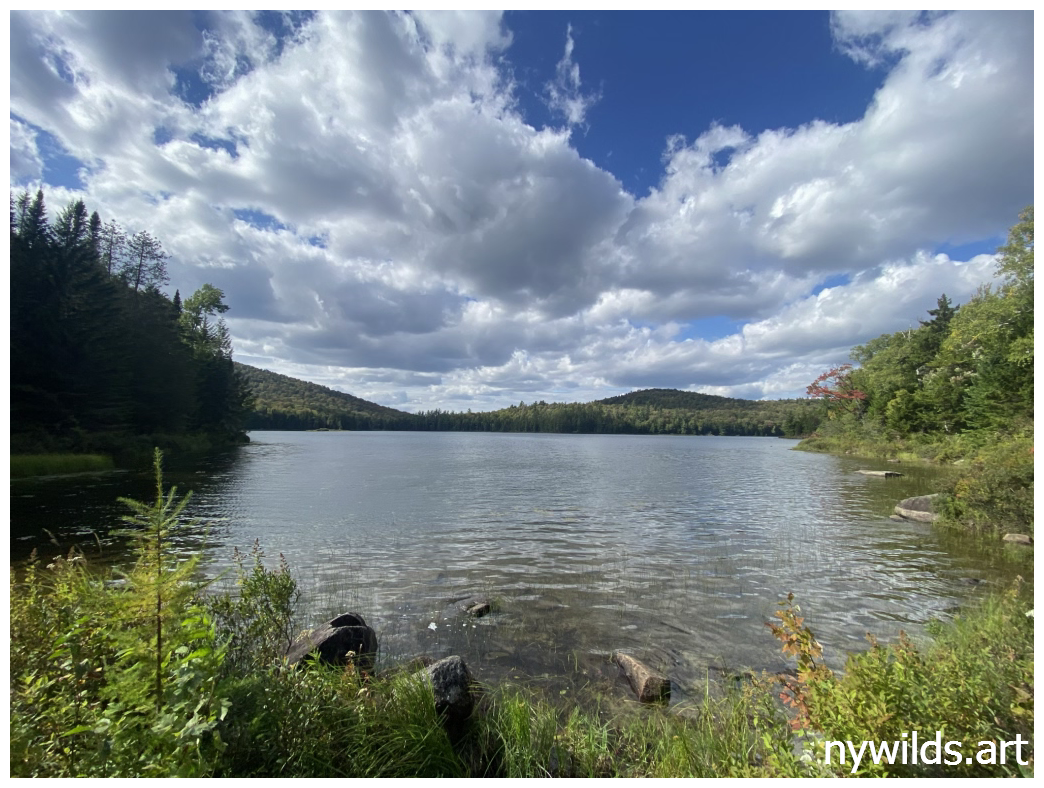
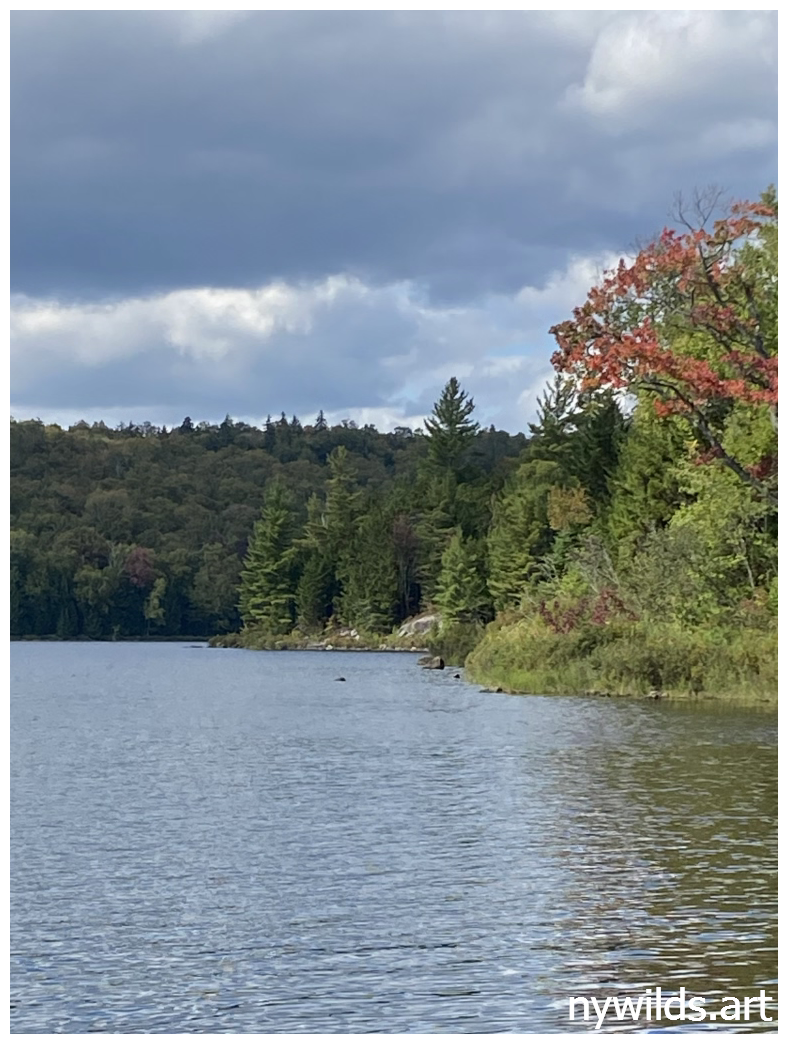
When the ponds finally come into view after a brief downhill approach, the effect is immediate. Breath catches. The mind goes quiet. In a busy world, places like this can feel almost medicinal. The stillness of these backcountry ponds, set well away from easy access and held by the folds of the wilderness, has a way of washing ordinary worry right off a person. What remains is simpler: light on water, shoreline detail, the shape of spruce and hardwood reflected in a calm surface, the feeling that distance from the road still matters. Remote ponds in the Adirondacks always carry some of that power, but Siamese Ponds seem to concentrate it.
I spent the night near the Sacandaga River in a hammock, outside any official campsite, while more formal options sat nearby around the bridge area. That choice fit the trip. The whole route had felt like a steady shedding of noise, and the camp carried the same tone. Conditions were close to perfect, the kind of September weather that makes it easy to stay outside until the light is gone and easy to wake without regret. No dramatic storm story, no survival lesson, just a clean evening in the woods. Those are often the trips that last the longest in memory.
What stays with me most is the design of the journey itself. This is a distinctive Adirondack backpack not because it delivers one headline feature, but because it layers them in sequence. First the immediate work of the climb over Eleventh Mountain. Then the gentle drop to the Scandaga. Then the long upstream travel beside low water and early color. Then the suspension bridge, half landmark and half threshold. Then the final rise along the Siamese River and the release of arriving at the ponds. It is a route built on progression. Each part prepares you for the next.
For anyone considering the trip, that is the real draw. This is not only a destination hike. It is a river walk, a ridge crossing, a backcountry approach, and a quiet lesson in how landscape can reset the spirit when given enough time. Go when the water is low and the first fall color has started to show, and the woods reveal a more skeletal beauty. Go solo, if that kind of travel suits you, and the place may strip away more than fatigue. It may return a little clarity too.
Siamese Ponds feels like one of those Adirondack journeys that reminds you why long approaches still matter. By the time the ponds appear, you have earned their stillness. By the time you turn back, the river has already done its work. The world feels farther away than it is, and for a little while that distance is enough.